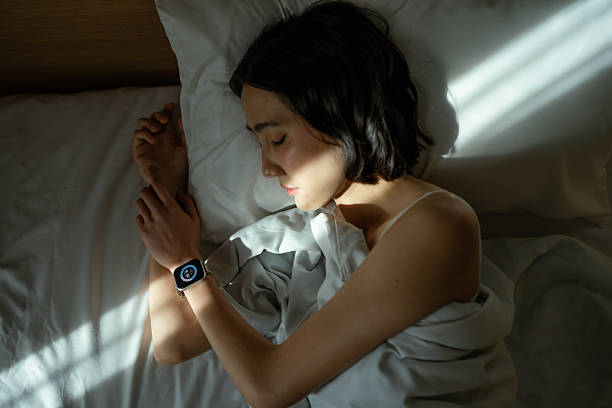
If you’ve struggled with falling asleep or staying asleep, you’re not alone. Over 35% of adults report insufficient sleep, and many are turning to the 3-2-1 bedtime routine — a simple yet powerful framework backed by sleep science that can transform your nights. Unlike complicated sleep protocols or expensive interventions, the 3-2-1 rule works with your body’s natural biology to prepare you for restorative sleep by removing the obstacles to it — not by forcing rest.
Step 1: 3 Hours Before — Stop Eating & Finish Caffeine
Caffeine has a half-life of 5–6 hours, meaning half of what you consume is still circulating 5–6 hours later. Research published in the Journal of Clinical Sleep Medicine found that 400mg of caffeine consumed 6 hours before bedtime reduced total sleep time by an average of 45 minutes — and most participants didn’t even notice the disruption. But food is equally important. Eating close to bedtime keeps your core temperature elevated, spikes blood sugar, and activates the digestive system at exactly the wrong moment.
- Caffeine cutoff: stop all caffeine by 2–3 PM. If you’re a slow metabolizer (roughly 50% of people carry the CYP1A2 variant), cut off even earlier.
- Digestive activity keeps your nervous system engaged and raises core body temperature — both prerequisites for staying awake, not asleep.
- Large meals cause blood glucose spikes followed by reactive hypoglycemia 2–3 hours later, which triggers cortisol release and can wake you mid-night.
- Alcohol is not a sleep aid: it suppresses REM sleep in the first half of the night and causes rebound sympathetic activation — fragmented sleep and early waking — in the second.
- If you’re genuinely hungry: a small snack with protein and healthy fat (a handful of almonds, a spoonful of almond butter) won’t spike blood sugar or require heavy digestion.
Step 2: 2 Hours Before — Stop Working & End Stressful Activity
Your nervous system has two modes: sympathetic (fight-or-flight) and parasympathetic (rest-and-digest). Work, emails, stressful conversations, and intense mental activity keep the sympathetic system activated, flooding your body with cortisol and adrenaline. Melatonin production only begins once the stress response downregulates. A 2024 study in Sleep Health found that people who maintained a consistent wind-down period experienced 23% better sleep efficiency and fell asleep 15 minutes faster on average.
- Close your laptop and put work away — the mere presence of an open inbox has been shown to sustain cognitive alertness even when not actively checked.
- Avoid difficult conversations or emotionally charged discussions in this window.
- Don’t check work messages, news, or social media content designed to provoke a reaction.
- Write a “done list” and a prioritized task list for tomorrow — externalizing unfinished tasks reduces pre-sleep cognitive intrusion and shortens sleep-onset latency.
- Replace work with calming activities: light reading, gentle stretching, journaling, or conversation with people you enjoy.
- If you work from home, physically separate from your workspace — close the office door, put the laptop away — to signal to your brain that the workday is over.
Step 3: 1 Hour Before — Stop Screens & Begin Wind-Down Rituals
Blue light from phones, tablets, and computers suppresses melatonin production — the hormone that regulates your sleep-wake cycle. Research from Harvard Medical School found that blue light suppressed melatonin for about twice as long as green light and shifted circadian rhythms by up to 3 hours. A 2024 study in JAMA Network Open showed that daily screen use before bed was associated with a 33% higher prevalence of poor sleep quality. The problem is compounded by the content itself: social media and video content keeps your brain mentally stimulated long after you’ve put the phone down.
- Put all screens away 1 hour before bed — phones, tablets, laptops, TVs.
- If you must use screens, enable blue light filters (Night Shift, f.lux) or wear blue-light blocking glasses{rel=“nofollow sponsored” target=“_blank”} — these reduce but don’t eliminate the melatonin-suppressing effect.
- Read a physical book under soft, warm-toned light — one of the most evidence-backed pre-sleep activities.
- Take a warm bath or shower: raising skin temperature triggers compensatory core body temperature reduction — a key physiological trigger for sleep onset.
- Try progressive muscle relaxation: systematically tense and release each muscle group from feet to face.
- Practice the 4-7-8 breathing technique: inhale for 4 counts, hold for 7, exhale for 8. This activates the parasympathetic system directly.
- Journal about your day or tomorrow’s plans — writing out what’s on your mind clears cognitive load before sleep.
- Dim all ambient lighting. Use lamps rather than overhead fixtures. Red-wavelength light has minimal melatonin-suppressing effect.
Step 4: How to Build the Habit
Knowing the framework is step one. Building the habit requires a small amount of intentional setup — particularly choosing your target bedtime and working backward to anchor each phase.
- Step 1 — Choose your bedtime and work backward: if you want to sleep at 11 PM, your 3-hour cutoff is 8 PM, 2-hour cutoff is 9 PM, 1-hour cutoff is 10 PM.
- Step 2 — Set three alarms: one for each cutoff. This removes the decision-making burden during the evening.
- Step 3 — Optimize your environment once: dim the lights starting 2 hours before bed, lower bedroom temperature to 65–68°F (18–20°C), remove screens from the bedroom or put them face-down out of reach.
- Step 4 — Be consistent 7 days a week: your circadian rhythm thrives on regularity. After 2–3 weeks, your body will begin to anticipate sleep at the same time, making the routine more effective with every passing night.
- Weekend drift: try to keep your sleep and wake times within 30–45 minutes of your weekday schedule. “Social jet lag” — the gap between weekday and weekend timing — is a significant predictor of poor sleep quality.
Real-World Results
People who implement the 3-2-1 routine consistently report measurable improvements within the first week — with benefits compounding over time as the routine becomes habitual.
- Falling asleep 15–30 minutes faster (reduced sleep-onset latency)
- Fewer middle-of-the-night awakenings
- Higher percentage of deep (N3) and REM sleep as measured by consumer trackers
- Feeling more refreshed upon waking — without needing an alarm
- Improved mood, focus, and appetite regulation during the day
- One study tracking sleep improvements found that participants who followed the 3-2-1 framework experienced a 23% improvement in sleep efficiency within the first two weeks
Common Challenges & Solutions
Q: “I work late and can’t stop 2 hours before bed.”
A: Do what you can. Even stopping work 1 hour before bed is meaningfully better than working right up to sleep. If you must work late, use blue-light glasses, keep the activity low-stress, and protect the screen-free final 30 minutes as a non-negotiable.
Q: “I’m hungry 3 hours after dinner.”
A: Eat a larger dinner with more protein and healthy fats, which produce greater satiety. If you’re still hungry, a small protein-fat snack (almonds, Greek yogurt, a boiled egg) won’t disrupt sleep. Avoid high-glycemic snacks like crackers or fruit juice.
Q: “I follow the routine but still can’t fall asleep.”
A: Give it 2–3 weeks — your circadian system takes time to reset. If sleep doesn’t improve, examine other variables: stress levels, exercise timing (avoid intense workouts within 2–3 hours of bed), bedroom temperature, alcohol use, or undiagnosed sleep disorders. Consult a sleep specialist if persistent.
Q: “My schedule is irregular due to shift work.”
A: Apply the 3-2-1 rule to whenever you’re sleeping, not to a fixed clock time. The principle is the same: 3 hours before your sleep window, stop eating; 2 hours before, stop work; 1 hour before, stop screens. The biology doesn’t change with the clock.
Q: “My partner has different sleep habits.”
A: Negotiate the shared environment — bedroom temperature, lighting, and screens are the highest-impact variables. A sleep mask and earplugs can compensate for a partner who uses their phone in bed. Ultimately, the 3-2-1 routine is individual; you can implement it regardless of your partner’s schedule.
Complementary Practices That Amplify Results
The 3-2-1 routine is powerful on its own, but pairing it with these evidence-based practices creates a compounding effect.
- Morning sunlight exposure: 10–30 minutes of bright outdoor light within 1–2 hours of waking anchors your circadian rhythm and makes evening melatonin onset more reliable.
- Regular exercise: physical activity significantly improves sleep quality and increases slow-wave sleep. Avoid intense sessions within 2–3 hours of bedtime.
- Consistent wake time: waking at the same time every day — including weekends — is the single most important circadian anchor. If you must sacrifice something, protect your wake time over your bedtime.
- Magnesium-rich foods: magnesium promotes muscular relaxation and GABA activity. Sources: almonds, spinach, pumpkin seeds, dark chocolate. Magnesium glycinate or threonate supplement is well-tolerated if dietary intake is insufficient.
- Strategic napping: if napping, keep it to 20–30 minutes and complete it before 3 PM to avoid blunting nighttime sleep pressure.
- Cool your bedroom before you get in: set the thermostat to 65–68°F (18–20°C) and use it as a cue that sleep is approaching.
Key Takeaways
- The 3-2-1 routine works by removing biological obstacles to sleep — not by forcing rest.
- Stop all caffeine 5–6 hours before bed (2–3 PM for most people). Its half-life is longer than you think.
- The 2-hour work cutoff allows cortisol to downregulate and melatonin production to begin.
- Blue light from screens suppresses melatonin and shifts your circadian clock by up to 3 hours. The 1-hour screen cutoff is non-negotiable.
- A warm bath 1–2 hours before bed is one of the most evidence-backed sleep-onset interventions available.
- Consistency beats perfection: follow the routine at the same time 7 days a week. Your body will begin anticipating sleep automatically within 2–3 weeks.
References
- Drake, C., et al. (2013). Caffeine effects on sleep taken 0, 3, or 6 hours before going to bed. Journal of Clinical Sleep Medicine, 9(11), 1195–1200.
- Harvard Medical School. (2024). Sleep hygiene: Simple practices for better rest. Harvard Health Publishing.
- Shechter, A., et al. (2018). Blocking nocturnal blue light for insomnia: A randomized controlled trial. Journal of Psychiatric Research, 96, 196–203.
- Silvani, M.I., et al. (2022). The influence of blue light on sleep, performance and wellbeing. Nature and Science of Sleep, 14, 1747–1763.
- West, K.E., et al. (2011). Blue light from light-emitting diodes elicits a dose-dependent suppression of melatonin. Journal of Applied Physiology, 110(3), 619–626.
- Zhong, C., et al. (2025). Electronic screen use and sleep duration and timing in adults. JAMA Network Open, 8(2), e2500123.
- Kang, J.H., et al. (2009). Effects of an irregular bedtime schedule on sleep quality, daytime sleepiness, and fatigue. Sleep and Hypnosis, 11(2), 65–72.