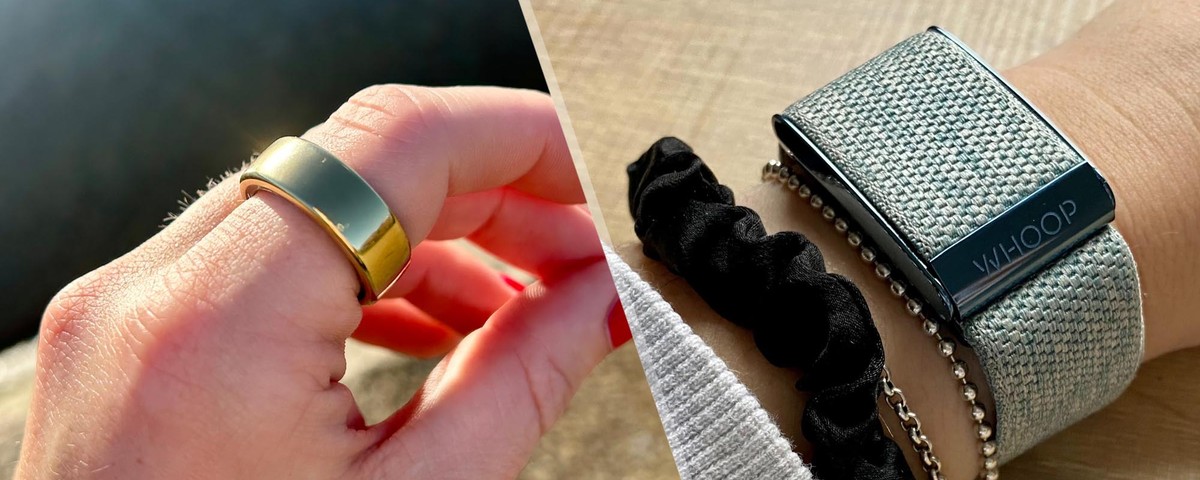
Two devices dominate the conversation when serious sleep tracking comes up: the Oura Ring Gen 3 and the WHOOP 4.0. Both measure heart rate variability, sleep stages, and recovery. Both have devoted followings. But they are built around fundamentally different philosophies — and choosing the wrong one is an expensive mistake.
This comparison cuts through the marketing noise and tells you exactly which device belongs on your body.
Quick Verdict
Buy the Oura Ring if you want the most accurate sleep tracker available in a form most people will actually wear long-term. Its ring-based HRV measurement is more accurate than wrist-based alternatives, the one-time cost is reasonable, and the sleep data is genuinely actionable for the average person. Check price on Amazon →{rel=“nofollow sponsored” target=“_blank”}
Buy WHOOP only if you are a dedicated athlete or coach who needs granular strain and recovery metrics tied to training load. Check price on Amazon →{rel=“nofollow sponsored” target=“_blank”} WHOOP’s model is built around performance, not sleep — and its subscription cost makes it a poor choice for anyone whose primary goal is understanding their sleep.
Side-by-Side Comparison
| Feature | Oura Ring Gen 3 | WHOOP 4.0 |
|---|---|---|
| Device price | $299–$349 | $0 (included with subscription) |
| Subscription cost | $5.99/month | $30/month |
| Form factor | Ring (finger) | Wristband |
| Sleep stage accuracy | ~85% vs PSG | ~75% vs PSG |
| HRV measurement | Finger (high accuracy) | Wrist (moderate accuracy) |
| Battery life | 4–7 days | 4–5 days |
| Water resistance | 100m | 10m |
| Best for | Sleep-focused users, general wellness | Athletes, performance tracking |
| 3-year total cost | ~$443 | ~$1,080 |
Sleep Tracking: Oura Wins
Sleep tracking accuracy is where Oura pulls decisively ahead. Independent validation studies comparing consumer wearables against polysomnography (PSG) — the clinical gold standard — consistently place Oura at roughly 85% accuracy for sleep stage classification. WHOOP lands around 75%.
The reason for this gap is physics. The finger is significantly better than the wrist for photoplethysmography (PPG) measurements, which is how both devices capture heart rate and HRV. The arteries in the finger sit closer to the skin surface and experience less motion artifact. During sleep, this translates to cleaner HRV data and more reliable detection of transitions between light, deep, and REM sleep.
Oura’s readiness score — a daily metric that synthesizes HRV, resting heart rate, body temperature, and sleep quality — is genuinely useful. It is not a gimmick. After a few weeks of wear, the patterns it surfaces (how alcohol tanks your HRV, how late-night eating raises your resting heart rate) change behavior in ways that matter.
Recovery & Training: WHOOP Wins
If you train seriously, WHOOP’s model makes more sense. It is built around a concept called Strain — a measure of cardiovascular load during your waking hours — which feeds directly into a recovery recommendation the following morning. The question WHOOP answers is: “Given how hard I trained yesterday, am I recovered enough to push hard today?”
That is a different question than what Oura answers. Oura will tell you how well you slept. WHOOP will tell you how hard your body worked and whether it has bounced back. For athletes managing training blocks, the WHOOP model is more aligned with how periodization actually works.
WHOOP also integrates with a coaching journal that lets you tag behaviors (caffeine timing, stress levels, training type) and correlates them with recovery over time. For a dedicated athlete willing to engage with the data, this is powerful. For someone who just wants to know if they slept well, it is overkill.
Cost Comparison
This is where the decision often gets made.
Oura Ring Gen 3 costs $299 for the device (Heritage style; the Horizon is $349) plus $5.99 per month for the membership. Over three years, that is approximately $443 total. The membership unlocks the full app experience, but the ring functions as a basic tracker even without it.
WHOOP 4.0 bundles the hardware into the subscription — there is no upfront device cost. But at $30 per month, the three-year total comes to $1,080. There is no way around it: WHOOP is a significantly more expensive commitment.
If you are on the fence, the cost math alone should settle it. WHOOP’s premium is only justified if you are extracting value from its performance-coaching features. For sleep tracking, you are overpaying by more than double.
Form Factor & Comfort
The ring versus wristband question is more personal than people expect.
The Oura Ring is genuinely discreet. It looks like a piece of jewelry, which means most people wear it consistently — including at work, in social settings, and overnight. Consistent wear is the single biggest factor in data quality. A tracker you take off because it feels awkward generates gaps that undermine every trend you are trying to spot.
The ring does have downsides. Sizing matters, and finger width fluctuates slightly with hydration and temperature. Oura ships sizing kits to help, but it is an extra step. You also cannot wear it comfortably during heavy barbell work due to ring crush risk — though titanium rings have significant safety margins.
The WHOOP band is soft and comfortable for most wrist wearers. Athletes often prefer it because it does not snag on equipment and the wrist is already familiar territory for wearables. WHOOP offers multiple band styles including a bicep band, which many lifters prefer. The downside is that wristbands are visible and not everyone wants to wear one socially or professionally.
Who Should Buy the Oura Ring
- You want the most accurate sleep stage tracking available in a consumer device
- Your primary goal is understanding and improving sleep quality
- You want a low-profile tracker you will actually wear everywhere, every day
- You prefer a one-time device cost with a modest ongoing subscription
- You do not need training load or sport-specific performance coaching
Who Should Buy WHOOP
- You are an athlete or coach managing training load and recovery
- You track structured workouts and want them integrated with your recovery data
- You are already paying for a fitness subscription ecosystem and WHOOP fits in
- You prefer a wristband to a ring
- Budget is not a major concern and you will engage deeply with the coaching features
Verdict
For most people — meaning anyone whose primary goal is sleeping better, not optimizing athletic performance — the Oura Ring is the clear choice. It is more accurate, far less expensive over time, and built around the metrics that actually matter for sleep.
WHOOP is not a bad product. It is a different product for a different user. If you spend serious hours training and want your wearable to be a performance tool first and a sleep tracker second, WHOOP earns its subscription. But recommending it to a general audience as a “sleep tracker” would be misleading.
Buy the Oura Ring. Wear it for 30 days. The patterns it reveals about your sleep will likely be worth more than the device cost on their own. Check price on Amazon →{rel=“nofollow sponsored” target=“_blank”}
For a broader look at the sleep tracker category — including budget options and more detailed accuracy breakdowns — see our full best sleep trackers guide.