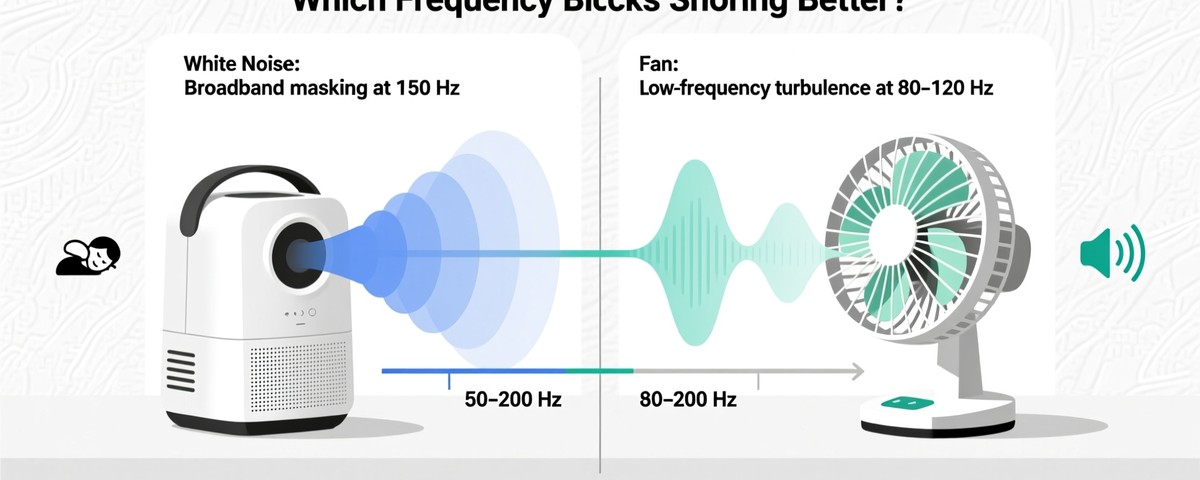
A lot of people sleep with a fan running and have never questioned it. It makes a sound, it moves air, it works. But if you are actively trying to optimize your sleep environment, the fan-vs-white-noise-machine question is worth thinking through — because these two options are not as interchangeable as they seem.
Here is the direct comparison.
Quick Verdict
A white noise machine is better for most people. It delivers more consistent masking sound, does not affect your room temperature, poses no respiratory downsides, and gives you options beyond one fixed mechanical hum. It is the better tool for the specific job of masking sleep-disrupting noise.
A fan is better if you genuinely want moving air. The cooling effect and the feel of airflow are things a white noise machine cannot replicate. If you run hot at night and the air movement helps you stay comfortable, the fan is doing two jobs at once — and that matters.
The Key Differences
| Factor | White Noise Machine | Fan |
|---|---|---|
| Sound type | Engineered (pink, white, brown noise, etc.) | Mechanical (fixed hum) |
| Temperature effect | None | Mild cooling via convection |
| Air circulation | None | Yes |
| Sound consistency | Very consistent (non-looping options) | Consistent but varies with blade speed |
| Cost | $40–$150 | $20–$100 |
| Portability | Highly portable | Moderate (size-dependent) |
| Sound variety | Multiple options | One sound per speed setting |
Sound Quality
A fan produces a real mechanical sound — the result of spinning blades cutting through air. This sound has a natural randomness to it that many people find more pleasing than engineered audio. There is a reason “fan sound” is one of the most-streamed audio tracks on sleep apps. It is a familiar, organic sound that the brain seems to accept without resistance.
The limitation is that you get one sound per fan. At low speed it is a soft hum. At high speed it is louder and more aggressive. You cannot change the character of the sound without changing the fan itself.
A white noise machine gives you options. Beyond basic white noise, most machines offer pink noise (softer, more natural — the sound of rainfall) and brown noise (deeper, richer — like a strong wind or a river). Research suggests pink and brown noise may be more effective at masking speech frequencies, which are the sounds most likely to interrupt sleep. You can also dial in the exact volume independent of anything else in the room.
High-quality machines like the LectroFan use non-looping sound generation, which eliminates the tell-tale repetition that cheaper machines produce and that sleeping brains learn to detect. If you have ever woken up because a loop restarted, you know why this matters.
Temperature Effects
This is the deciding factor for a lot of people, and it is worth being direct: a fan does not cool a room. It creates convective cooling on your skin by moving air across it, which can lower your perceived temperature by 2–4 degrees. If you tend to overheat at night, that effect is meaningful and a white noise machine does not offer it.
On the flip side, if you sleep with a partner who runs cold, or if you are using a temperature-controlled mattress pad to dial in your sleep environment precisely, a fan introduces a variable that complicates that. White noise machines make no thermal contribution — they are acoustically neutral in the temperature equation.
If you have your room temperature dialed in and just need sound masking, add a white noise machine. If you are running hot and do not have air conditioning or a cooling mattress, the fan is earning its place.
Health Considerations
Fans have some downsides that rarely get mentioned in casual recommendations.
First, continuous airflow can dry out your nasal passages and throat, particularly in winter when indoor air is already low humidity. This is not a dramatic health risk, but it can contribute to morning congestion, mild sore throats, and the kind of nasal dryness that disrupts sleep in its own right.
Second, fans circulate whatever is in the air — dust, pet dander, pollen. If you have allergies or asthma, a running fan during sleep can be quietly undermining your respiratory health. This is especially true for older fans or any fan that is not cleaned regularly.
White noise machines have no airflow, which means none of these issues apply. If you have respiratory sensitivities, this is a meaningful advantage worth taking seriously.
Cost Comparison
Both options are affordable. A decent box fan runs $20–$50; name-brand options like Vornado go up to $100. A quality white noise machine starts around $40–$60 for reliable options like the Marpac Dohm or LectroFan Evo, with premium machines topping out around $150.
Over multiple years of nightly use, maintenance costs favor the white noise machine — fans collect dust and require cleaning, and motors eventually fail. A white noise machine has no moving mechanical parts (in most models) and will outlast most fans.
When a Fan Is Better
- You run hot at night and the airflow genuinely helps your comfort
- You do not have allergies or respiratory sensitivities
- You love the specific sound of a fan and nothing else feels right
- You want a dual-purpose device that handles both sound and temperature
- Budget is tight and you already own a fan
When a White Noise Machine Is Better
- Your primary goal is masking outside noise (traffic, neighbors, snoring partner)
- You have allergies, asthma, or sinus issues that airflow aggravates
- You want sound variety — different noise colors, ocean sounds, rain
- You travel and need something portable and consistent across environments
- You share a bedroom and want precise volume control without temperature impact
The Best of Both Worlds
If you love the sound of a fan but do not actually need the airflow — or if a partner is cold while you are hot — the SNOOZ is worth knowing about. It uses a real fan motor internally to generate authentic fan sound, but the airflow is contained within the housing. You get the organic mechanical sound without the air movement, the temperature interference, or the allergen circulation.
It is more expensive than a basic white noise machine at around $80, but for people who specifically want fan sound without the downsides, it solves the problem cleanly. See our best white noise machines guide for a full SNOOZ review and other top picks.
Verdict
If you do not specifically need moving air, buy a white noise machine. It does the one job — masking disruptive sound — better than a fan does: more consistently, with more options, and without any of the respiratory or temperature side effects. For the cost of a dinner out, a machine like the LectroFan Evo will reliably improve your sleep environment for years.
Keep using a fan if moving air is part of what makes your sleeping environment comfortable. There is nothing wrong with it, and for people who sleep hot, it is genuinely doing something a white noise machine cannot. Just clean it regularly and consider whether your allergies might be telling you something.
For specific product recommendations and a full breakdown of the white noise machine category, visit our best white noise machines guide.