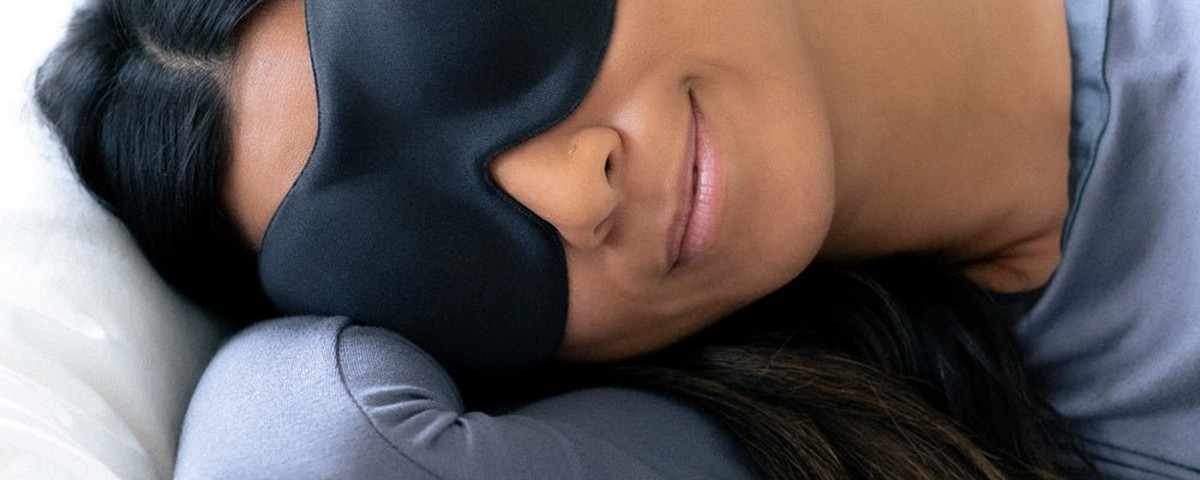
A sleep mask sounds like a minor accessory. In practice, for the right people, it’s one of the highest-leverage sleep investments you can make — cheaper than blackout curtains, portable, and addressing the same core problem: light disrupting sleep.
The challenge is that most sleep masks fail at their primary job. They leak light around the nose, press on the eyes, or slip off during the night. Getting this right matters more than most reviews acknowledge.
Why Sleep Masks Work
The mechanism is the same as with blackout curtains: light suppresses melatonin production via photoreceptors in the retina, including specialized cells called intrinsically photosensitive retinal ganglion cells (ipRGCs) that exist purely to signal ambient light levels to the brain. These cells respond even to light that doesn’t produce a conscious visual experience — meaning light through your closed eyelids, at levels far below what you’d consciously notice, measurably affects your melatonin levels and sleep architecture.
Research published in the Journal of Sleep Research found that even dim ambient light during sleep increases heart rate, reduces slow-wave sleep, and impairs next-day insulin sensitivity. The body is more sensitive to light during sleep than most people realize.
Who benefits most from a sleep mask:
- Shift workers sleeping during daylight hours, where blackout curtains aren’t enough or aren’t an option.
- Travelers dealing with bright hotel rooms, overnight flights, and unfamiliar light environments.
- Light-sensitive sleepers who wake at the slightest pre-dawn light change.
- Partners with mismatched schedules, where one person is reading or using a phone while the other sleeps.
- People who can’t install blackout curtains (renters, dorm rooms, frequent movers).
What Separates a Good Sleep Mask from a Bad One
The nose gap is the biggest failure point. Most flat fabric masks sit fine over the eyes but leave a gap at the nose bridge where light floods in from below. You can be 80% covered and still have enough light exposure to affect melatonin. The solution is a contoured design with a nose piece that presses against the face along the nose bridge, or an eye cup design elevated enough that the bottom edge below the eyes rests against the cheekbones.
Eye cups vs. flat masks. Contoured eye cup masks hold the mask material away from your eyelids entirely. This matters for two reasons: no pressure on the eyes (which can be uncomfortable and potentially affect REM sleep, which involves significant eye movement), and the cup structure naturally creates a seal against the face without pressing flat against the eyeballs. For most people, a quality contoured mask is more comfortable for full-night use than a flat mask.
Breathability and heat. The area around the eyes runs warm, and a mask that traps heat against the face is uncomfortable. Look for masks with ventilation near the nose cup or made from breathable fabrics (silk, bamboo, moisture-wicking synthetic).
Strap comfort and pressure. Wide straps distribute pressure better than thin elastics. Adjustable straps accommodate different head sizes and sleeping positions. Straps that go around the head rather than over the ears avoid the discomfort of pressure on the ear cartilage. Velcro closures can snag hair — look for buckle or slider adjustments.
Travel and portability. For travel use, a mask that packs flat without warping and comes with a carrying pouch is meaningfully more convenient. Contoured masks that hold their shape are trickier to pack but maintain their blackout seal.
Types of Sleep Masks
1. Contoured/3D Eye Cup Masks — Best for Most People
Raised eye cups that sit over the eyes without contact. Excellent for side, back, and combination sleepers. The best option for achieving total darkness with all-night comfort. The design takes a few nights to get used to, but most people prefer it once they adapt.
2. Flat Fabric Masks — Lightweight, Travel-Friendly
Thin, soft, foldable masks. Best for light to moderate light blocking on travel or occasional use. They can’t match the blackout seal of a contoured mask, but they pack into a jacket pocket and weigh nothing.
3. Weighted Sleep Masks
Gentle weight (typically 150–300g) distributed across the eyes and forehead. The concept: light pressure activates the parasympathetic nervous system, similar to a weighted blanket. Some users report reduced anxiety and easier sleep onset. These work best for back sleepers — the weight makes them impractical for side sleepers.
4. Silk Masks — Luxury, Gentle on Skin
Natural or synthetic silk masks are the choice for people with sensitive skin around the eyes. Silk is naturally temperature-regulating, hypoallergenic, and won’t absorb as much of your skincare products as cotton. They don’t solve the nose gap problem, but premium silk masks (like those from Slip) are as comfortable as any flat mask gets.
5. Smart Masks — Light Therapy and Sound
Masks that incorporate LED light therapy panels, speakers, or vibration for guided sleep or wake routines. Niche products for specific use cases — light therapy for circadian rhythm correction is legitimate, but the execution varies widely. Not a first buy.
Top Picks
1. Manta Sleep Mask — Best Overall
Rating: 9.5/10 The benchmark contoured mask. Manta’s eye cups are independently adjustable, so you can position each cup precisely over your eye socket. The nose seal is the best of any mask on this list. The head strap is wide, the adjustment is smooth, and the mask stays put through the night.
- Pros: True total blackout, zero eye pressure, fully adjustable eye cups, wide comfortable strap, works for all head sizes
- Cons: Bulkier than flat masks, takes a few nights to position correctly, more expensive (~$35)
2. Alaska Bear Natural Silk Sleep Mask — Best Budget Option
Rating: 8/10 The best flat mask available at its price point (~$10). Natural silk exterior is genuinely softer than cheaper masks, and the nose wing design reduces (but doesn’t eliminate) the gap under the nose bridge. Good for travel and anyone who doesn’t need total blackout.
- Pros: Affordable, very soft, good for skin, decent nose coverage, packs flat
- Cons: Not total blackout, nose gap present, elastic strap not adjustable
3. Tempur-Pedic Sleep Mask — Best for Side Sleepers
Rating: 8.5/10 Made with Tempur material (the same pressure-relief foam as their mattresses), this mask conforms to the face and achieves a better seal than most flat masks. The proprietary foam shape reduces pressure on the eyes while maintaining contact around the face perimeter.
- Pros: Excellent pressure relief, good seal, comfortable for side sleepers, machine-washable cover
- Cons: Foam retains heat, more expensive (~$25), not as adjustable as Manta
4. Gravity Weighted Sleep Mask — Best for Anxiety/Stress-Related Insomnia
Rating: 8/10 About 200g of evenly distributed weight across the eyes and forehead. The pressure is genuinely calming for people with stress-related sleep difficulty. Gravity’s mask also achieves decent blackout with its structured design. The main limitation for side sleepers: the weight shifts uncomfortably when you’re not lying on your back.
- Pros: Genuinely calming pressure effect, good blackout, well-built, nice sleep surface material
- Cons: Only works well for back sleepers, heavy to travel with, expensive (~$30–35)
5. Manta COOL Sleep Mask — Best for Hot Sleepers
Rating: 8.5/10 The same adjustable eye cup system as the original Manta, but with a moisture-wicking, cooling fabric cover. If you find that any mask over your face makes you warm, this is the solution. Identical blackout performance to the standard Manta.
- Pros: All the benefits of Manta + cooling fabric, great for warmer sleepers and summer use
- Cons: Slightly more expensive than standard Manta, cooling fabric feels different (not worse, just different)
Quick Comparison Table
| Mask | Blackout Level | Best For | Price |
|---|---|---|---|
| Manta Sleep | Total | Most sleepers | ~$35 |
| Alaska Bear Silk | 95%+ | Budget/travel | ~$10 |
| Tempur-Pedic | 98%+ | Side sleepers | ~$25 |
| Gravity Weighted | 97%+ | Back sleepers, anxiety | ~$30–35 |
| Manta COOL | Total | Hot sleepers | ~$40 |
For a complete light-blocking bedroom setup, pair a quality sleep mask with blackout curtains and the right bedroom temperature.
Key Takeaways
- Light through closed eyelids measurably suppresses melatonin and reduces sleep quality — a sleep mask is a direct intervention.
- The nose gap is the most common reason sleep masks fail. Contoured eye cup masks like the Manta solve this; flat masks largely don’t.
- The Manta Sleep Mask is the clear best pick for most people — adjustable, total blackout, comfortable for all-night wear.
- For budget or travel use, the Alaska Bear silk mask punches well above its price point.
- Weighted masks are worth considering specifically for stress-related insomnia, but only if you primarily sleep on your back.
- Give any new sleep mask 3–5 nights before deciding — the sensation of wearing a mask to bed takes a short adjustment period.