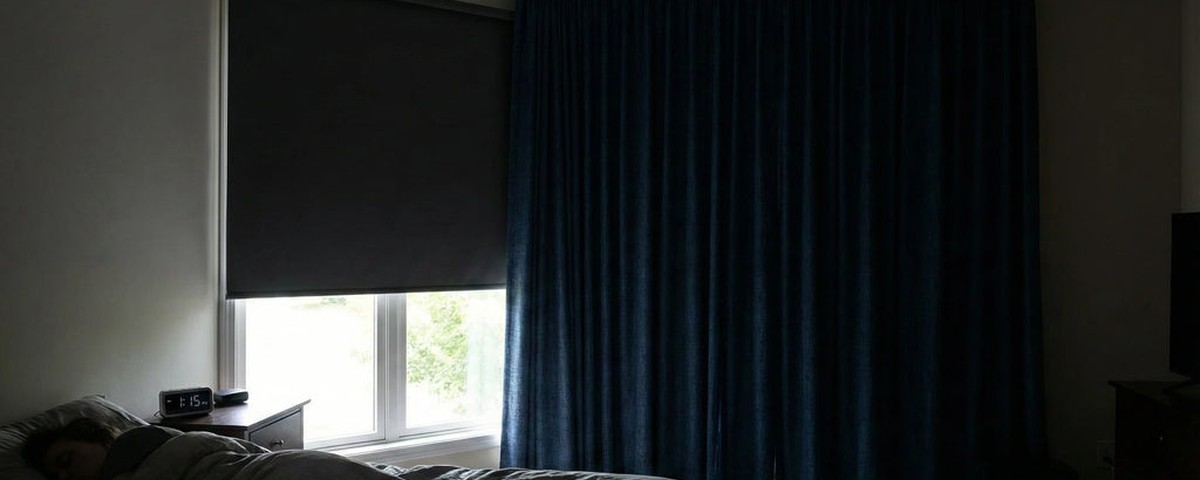
Your bedroom might be darker than most, but if you can make out the shape of furniture after your eyes adjust, it’s not dark enough for optimal sleep. Light pollution — from streetlights, passing cars, a neighbor’s porch light, or the pre-dawn sun in summer — is one of the most underestimated disruptions to sleep quality.
The good news: blackout curtains are one of the cheapest, highest-impact upgrades you can make to your sleep environment. The bad news: most people hang them wrong and wonder why they still wake up at 6am.
Why Light Ruins Sleep
The mechanism is direct: light suppresses melatonin production via the suprachiasmatic nucleus (SCN), your brain’s master clock. This isn’t just about bright lights — even low-level ambient light (5–10 lux, roughly equivalent to a dim nightlight) measurably suppresses melatonin and shifts your sleep architecture.
What surprises most people: light still affects you through closed eyelids. Your eyelids block around 97–99% of visible light, but enough passes through to register with retinal photoreceptors — particularly the melanopsin-containing cells most sensitive to blue-spectrum light. These cells don’t even contribute to conscious vision; their only job is to signal the SCN about ambient light levels.
The populations most affected:
- Shift workers sleeping during daylight hours face the most severe disruption.
- Urban dwellers contend with constant light pollution from street infrastructure.
- Parents of young children often need to maintain darkness for both naps and early bedtimes year-round.
- Anyone in northern latitudes deals with summer sunrise as early as 4am.
For all of these, blackout curtains aren’t a luxury — they’re infrastructure.
What Makes a True Blackout Curtain
The fabric itself is only part of the equation. Three construction approaches exist:
Triple-weave (woven blackout fabric): Three layers of tightly woven fabric — typically two outer decorative layers sandwiching a dense black inner layer. These look like normal curtains, block light well through the fabric itself, and tend to be durable. The limitation: they still have gaps at the edges unless installed carefully.
Foam-backed curtains: A foam or rubber coating bonded to the back of the fabric. These provide the best light-blocking through the panel itself but can feel stiff, may crack over time, and aren’t as aesthetically appealing. They’re common in hotel rooms for a reason.
Liner systems: Separate blackout lining panels that attach to or hang behind decorative curtains. Flexible and lets you keep any curtains you like, but adds complexity and still doesn’t solve the edge gap problem.
The edge gap problem — this is what ruins most setups. Even a 100% blackout-rated curtain panel leaks light at the top, sides, and bottom if it’s hung close to the window frame. The solution is to hang your curtain rod as wide and high as possible — at least 4–6 inches beyond the window frame on each side and 4 inches above. Use curtains that extend to the floor (not just to the window sill). For side gaps, consider wrap-around curtain rods that angle toward the wall.
What to Look For
Light-blocking percentage. “Blackout” has no legal definition in the curtain industry. A curtain marketed as blackout might block 85% of light or 100% — a massive difference in practice. Look for products that explicitly claim 100% light blocking, and check reviews specifically for mentions of light leakage.
Thermal insulation. A secondary benefit of proper blackout curtains: they reduce heat transfer through windows. A quality blackout curtain can reduce heat gain by 24% in summer and heat loss in winter, which also supports the cool bedroom temperatures that promote deeper sleep.
Noise reduction. Denser curtain fabrics absorb sound. Not a substitute for proper soundproofing, but a meaningful reduction in traffic noise for urban sleepers.
Header style. Rod pocket headers are cheapest but make the curtain hard to open and close. Grommet tops slide easily and hang evenly. Back-tab headers have a cleaner look. For blackout functionality, grommet or back-tab are recommended — rod pocket headers often create light gaps at the top due to the gathered fabric.
Top Picks
1. NICETOWN Full Blackout Curtains — Best Overall
Rating: 9/10 NICETOWN’s triple-weave panels consistently deliver genuine full blackout performance. They hang well, have a clean appearance, and come in a wide range of sizes and colors. The 52” x 84” panels are the most popular size. At around $25–35 per panel, they offer excellent value.
- Pros: True full blackout, good fabric weight, thermal insulation, wide size selection
- Cons: Not the most luxurious appearance; sizes can run slightly short
Check price on Amazon{rel=“nofollow sponsored” target=“_blank”}
2. Deconovo Blackout Curtains — Best Budget Pick
Rating: 8/10 Reliable, affordable foam-backed panels that genuinely block light. Not as attractive as woven blackout fabrics, but they perform. Best for rooms where aesthetics matter less (nurseries, basement bedrooms, shift worker setups).
- Pros: Very affordable (~$20/pair), excellent light blocking, widely available
- Cons: Foam backing can crease, less durable over years, limited decor appeal
Check price on Amazon{rel=“nofollow sponsored” target=“_blank”}
3. IKEA MAJGULL Blackout Curtains — Best for Aesthetics
Rating: 8/10 IKEA’s MAJGULL panels look like normal linen-style curtains but deliver solid blackout performance. Better for living spaces that need to look polished. Slightly more expensive than NICETOWN but worth it for the appearance.
- Pros: Attractive appearance, good weight, reasonable price (~$40/pair), easy to find in stores
- Cons: Not quite 100% blackout (better as 99%+), limited size options
4. Amazon Basics Room-Darkening Curtains — Best No-Frills Option
Rating: 7.5/10 Exactly what you’d expect: functional, plain, inexpensive. Adequate for casual use but not heavy-duty enough for shift workers or light-sensitive sleepers who need true darkness.
- Pros: Very cheap, available in many sizes, Prime shipping
- Cons: Not full blackout, thinner fabric, less thermal benefit
5. Eclipse Blackout Thermal Curtains — Best Thermal Performance
Rating: 8.5/10 Eclipse’s thermal blackout panels stand out for energy efficiency alongside light blocking. The foam-backed construction gives strong blackout performance and noticeably reduces both heat transfer and outside noise.
- Pros: Excellent thermal insulation, good noise reduction, true blackout
- Cons: Foam-backed look isn’t for everyone, heavier than woven alternatives
Quick Comparison Table
| Curtain | Light Blocking | Price/Panel | Best For |
|---|---|---|---|
| NICETOWN Triple Weave | 100% | ~$15–18 | Most people |
| Deconovo Foam-Back | 100% | ~$10–12 | Budget, nurseries |
| IKEA MAJGULL | 99%+ | ~$20 | Aesthetics |
| Amazon Basics | 95–99% | ~$12–15 | Casual use |
| Eclipse Thermal | 100% | ~$18–22 | Thermal + blackout |
DIY Blackout Solutions (Budget Options)
If you’re renting and can’t install a full curtain rod setup, or just need a quick fix:
Blackout liner clips. Stick-on magnetic or hook-and-loop strips that attach temporary blackout panels to your existing curtains or window frames. Not elegant, but surprisingly effective for eliminating edge gaps. Look for brands like Sleepout Portable or Blackout EZ on Amazon.
Static-cling blackout window film. Applies directly to glass, fully reversible, and blocks most light. Good for small windows or as a complement to curtains. Won’t block light from the entire window-wall area but significantly reduces glow.
Tape + foam board. The nuclear option for shift workers: foam insulation board cut to fit the window recess, faced with black fabric or simply painted black. Ugly, but achieves total darkness for under $20.
For further reading on building the ideal sleep environment, see our guides on ideal bedroom temperature and the circadian rhythm guide.
Key Takeaways
- Light — even at low levels — suppresses melatonin and degrades sleep quality through mechanisms that work even through closed eyelids.
- The biggest failure point for blackout curtains is edge gaps, not the fabric itself. Hang rods wide and high, use floor-length panels.
- NICETOWN triple-weave panels are the best all-around choice for most sleepers. IKEA MAJGULL is the pick if aesthetics matter.
- “Blackout” is a marketing term with no regulated definition — always check reviews for real-world light leakage reports.
- For renters or quick fixes, blackout liner clips and static window film are effective temporary solutions.