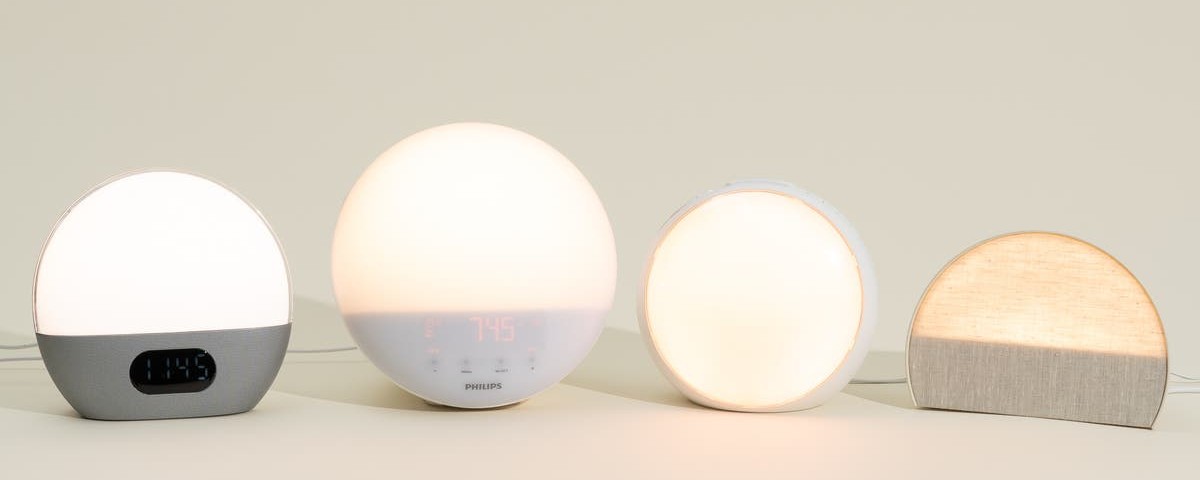
Sunrise alarm clocks do one genuinely useful thing: they replace the abrupt shock of a buzzer with a gradual light simulation that nudges your body toward waking more naturally. The science behind this is real — light suppresses melatonin and signals your circadian system to begin the wake cycle. The question is which device does it better.
The Hatch Restore 2 and the Philips SmartSleep HF3520 are the two most-recommended options in this category, and they take completely different approaches. Here is how to decide between them.
Quick Verdict
Buy the Philips SmartSleep if your primary goal is clinically effective light therapy — especially if you struggle with seasonal affective disorder, winter morning darkness, or waking up feeling groggy regardless of how much you slept. It delivers more light at higher intensity, and it has the published research to back it up. Check price on Amazon →{rel=“nofollow sponsored” target=“_blank”}
Buy the Hatch Restore 2 if you want a smart bedside device that ties together your sleep and wake routines — wind-down content, customizable soundscapes, guided meditations, and an app-controlled experience. It is the better product for people who want a bedside companion, not just a light. Check price on Amazon →{rel=“nofollow sponsored” target=“_blank”}
Side-by-Side Comparison
| Feature | Hatch Restore 2 | Philips SmartSleep HF3520 |
|---|---|---|
| Price | ~$199 | ~$200 |
| Light intensity | 250 lux | 300 lux |
| Smart app control | Yes (full app) | Limited |
| Sound library | 100+ sounds | ~10 preset sounds |
| Meditation/wind-down content | Yes (subscription) | No |
| Subscription required | Optional ($4.99/month for full content) | No |
| Sunrise simulation | Yes | Yes (clinically validated) |
| Best for | Smart home users, routine builders | Light therapy efficacy, simplicity |
Light Therapy Effectiveness: Philips Wins
When it comes to the core job — simulating a sunrise with enough light intensity to affect your circadian rhythm — Philips has a measurable edge.
The SmartSleep HF3520 produces 300 lux at peak brightness. The Hatch Restore 2 produces 250 lux. That 50-lux difference matters more than it sounds. Research on light therapy consistently shows that therapeutic effectiveness requires reaching sufficient intensity, and 300 lux crosses a threshold that 250 lux only approaches. The Philips has been independently validated in clinical studies and has earned recognition as a top pick by outlets including the New York Times Wirecutter — not because of marketing, but because it measurably improves how users feel upon waking.
The Philips also has a 20–30 minute gradual sunrise simulation that has been specifically studied in controlled settings. Subjects who woke with the SmartSleep reported feeling more alert and less groggy than those using standard alarms. That is not a marginal finding.
If you are dealing with Seasonal Affective Disorder (SAD), chronic morning grogginess, or you live somewhere with dark winters and need this device to function as light therapy — buy the Philips. It is the clinically grounded choice.
Smart Features & Customization: Hatch Wins
The Philips SmartSleep is, essentially, a good light with an alarm. That is not an insult — it does that job exceptionally well. But it does not do much else. You get about ten preset nature sounds, a basic physical interface, and no app integration to speak of. Once you set it up, it works the same way every day.
The Hatch Restore 2 is a different category of product dressed up as an alarm clock. Through the Hatch app, you get access to over 100 sounds (rain, white noise, brown noise, ocean, fan sounds), a library of guided meditations and sleep stories, and fully customizable routines. You can program a wind-down sequence — dimming lights, transitioning from nature sounds to a sleep meditation — and a wake sequence with your preferred sunrise color temperature and duration. Every element is adjustable from your phone.
The Hatch also doubles as a bedside lamp with tunable color temperature, which means it can shift from warm amber in the evening (melatonin-friendly) to bright white in the morning. That full-day utility justifies more of its cost.
The optional Hatch subscription ($4.99/month) unlocks the full content library. Without it, you still get a functional sunrise alarm and some core sounds — but the meditation and sleep story content is gated. Whether that subscription is worth it depends on how much you will use the guided content.
Price Comparison
At roughly $200, both devices land in the same price bracket for the hardware. The meaningful cost difference is the optional Hatch subscription. Over a year, that adds $60; over three years, $180.
If you go all-in on Hatch with the subscription, you are spending about $380 over three years versus $200 flat for the Philips. Whether that premium is justified depends entirely on how much you engage with the content library. Users who build a nightly routine around Hatch’s wind-down features typically find it worthwhile. Users who just want a sunrise alarm should save the money and buy the Philips.
Who Should Buy the Hatch Restore 2
- You want a full bedside sleep system, not just an alarm clock
- You value app control and the ability to customize your routine over time
- You are interested in wind-down meditations, sleep stories, or white noise variety
- You use your phone in bed and want a reason to set it across the room
- You want a tunable lamp that supports good light hygiene throughout the evening
Who Should Buy the Philips SmartSleep HF3520
- Your main concern is clinical light therapy effectiveness
- You have SAD or struggle significantly with waking in darkness
- You prefer simple, reliable devices without apps or subscriptions
- You want the most validated, no-fuss sunrise simulation available
- You find smart device ecosystems more annoying than helpful
Verdict
These two products are genuinely good at different things, which makes this a rarer case where the recommendation legitimately depends on your specific situation.
If you are buying a sunrise alarm clock primarily because you struggle with morning grogginess and want the therapeutic effects of light — go with the Philips SmartSleep. It is a more focused device, and it is better at the single thing both devices are marketed to do. Check price on Amazon →{rel=“nofollow sponsored” target=“_blank”}
If you are building a sleep routine and want a smart bedside device that supports both your wind-down and wake-up — go with the Hatch Restore 2. Check price on Amazon →{rel=“nofollow sponsored” target=“_blank”} The extra cost is justified by the broader utility, and the customization genuinely encourages consistent sleep habits in a way that the Philips cannot.
Do not let the “smart vs simple” framing fool you into thinking Hatch is automatically better because it does more. For pure morning light therapy, it is not. Choose based on what problem you are actually trying to solve.
For more sunrise alarm clocks and a full breakdown of the category, see our best sunrise alarm clocks guide.