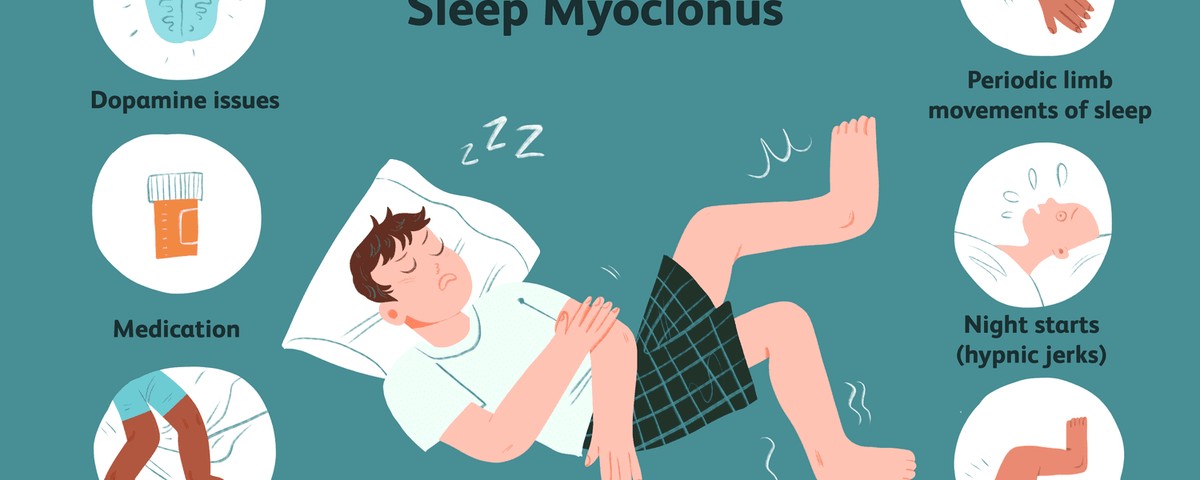
What Are Hypnic Jerks?
You are lying in bed, finally relaxed, beginning to drift off — and then, without warning, your whole body jolts and you are suddenly wide awake with your heart racing. Sometimes there is a vivid sensation of falling, or a flash of an image or sound just before the jerk.
This experience is called a hypnic jerk (also known as a hypnagogic jerk, sleep start, or myoclonic jerk). It is one of the most universal human experiences: research consistently finds that approximately 70% of people experience them, making them one of the most common sleep phenomena there is. Despite how alarming they can feel in the moment, hypnic jerks are almost always completely benign.
The jerks occur during the transition from wakefulness into sleep — the hypnagogic state — and typically involve the legs, arms, or the whole body. They usually happen just once or twice as you fall asleep, though some people experience them repeatedly on the same night.
The Science Behind Them
To understand hypnic jerks, you need to understand what happens neurologically at the threshold of sleep.
As you begin to fall asleep, your brain progressively reduces the signals it sends to your muscles. Muscle tone drops, breathing slows, and body temperature falls slightly. In normal, gradual sleep onset, this process is smooth.
However, during this transition, there is a period of instability. The brain’s reticular activating system (RAS) — the network of neurons responsible for maintaining wakefulness and arousal — does not always hand over control to the sleep-generating systems cleanly. Sometimes, as muscle tone drops, the RAS misinterprets the sudden reduction in sensory input and muscle activity as a signal that something is wrong — specifically, that the body is falling. In response, it sends an emergency “wake up and catch yourself” signal through the motor cortex, which produces the characteristic full-body jolt.
The accompanying sensation of falling, or of stumbling off a kerb, is the brain constructing a narrative to explain the sudden muscle activation. Some people also hear a loud sound or see a flash of light — these are called hypnagogic hallucinations and arise from the same transitional state of semi-consciousness.
The Evolutionary Theory
One widely discussed theory holds that hypnic jerks are an evolutionary remnant from our primate ancestors, who slept in trees. A sudden drop in muscle tone as you drifted off in a tree could mean you were about to fall from a branch. An automatic corrective jerk would have been a survival advantage. Whether or not this is the actual origin, the brain’s circuitry that produces the response is real and well-documented.
Why They Happen More Sometimes
While hypnic jerks are normal, they vary enormously in frequency and intensity. Several factors are known to make them considerably worse:
Caffeine and Stimulants
Caffeine delays sleep onset by blocking adenosine receptors, keeping the nervous system in a more aroused state. When you finally do fall asleep after late caffeine, the brain’s transition into sleep is less smooth, and the instability of the RAS handover is more pronounced. Other stimulants — including nicotine, certain decongestants, and pre-workout supplements — have a similar effect.
Sleep Deprivation and Exhaustion
This is one of the most common triggers. When you are severely sleep-deprived, sleep onset is both faster and more chaotic. The brain essentially crashes from high arousal into sleep in seconds, and that abrupt transition dramatically increases the probability of a hypnic jerk. People who fall asleep the moment their head hits the pillow, paradoxically, are more likely to jerk than those who take 10–20 minutes to drift off naturally.
Stress and Anxiety
Psychological stress keeps the sympathetic nervous system activated — elevated cortisol, higher heart rate, racing thoughts. A nervous system that is running “hot” at bedtime creates exactly the kind of unstable sleep-onset transition that produces hypnic jerks. Anxiety about sleep itself (a phenomenon common in insomnia) is a particularly effective way to amplify this.
Exercise Too Close to Bedtime
Intense physical exercise raises core body temperature and stimulates adrenaline release. Both of these effects take time to resolve. If you exercise within two hours of bed, the residual physiological arousal can make the transition to sleep more turbulent. Light stretching or yoga, however, tends to have the opposite effect.
Irregular Sleep Schedule
When you sleep at inconsistent times, your circadian rhythm is out of sync with your actual sleep timing. The body is not fully prepared for sleep at the time you are trying to fall asleep, which creates friction in the sleep-onset process and can increase hypnic jerk frequency.
Are They Dangerous?
In the vast majority of cases: no. A hypnic jerk is not a seizure, not a sign of neurological disease, and not harmful. It does not indicate that anything is wrong with your brain or your heart.
However, it is worth distinguishing hypnic jerks from Periodic Limb Movement Disorder (PLMD). PLMD involves repetitive, rhythmic movements of the legs (and sometimes arms) throughout the night — not just at sleep onset. These movements occur every 20–40 seconds during NREM sleep, can fragment sleep significantly, and often happen without the person being aware of them. A bed partner may notice them before the sleeper does. PLMD is associated with restless legs syndrome and iron deficiency, and it warrants a medical evaluation.
If your “jerks” are rhythmic, repetitive throughout the night, associated with an uncomfortable sensation in your legs in the evening (restless legs), or if they are disrupting your partner’s sleep regularly, speak with a doctor.
How to Reduce Them
Stop Caffeine Before Noon
The half-life of caffeine in the body is approximately five to seven hours. If you drink coffee at 3pm, a meaningful amount is still circulating at 10pm. Cutting caffeine off by noon gives most people a clean window into sleep.
Maintain a Consistent Sleep Schedule
Going to bed and waking at the same time every day — including weekends — reinforces the circadian signal that it is time to sleep at a predictable hour. Over time this smooths the transition into sleep.
Build a Wind-Down Routine
The 30–60 minutes before bed should be treated as a deceleration zone. Dimming lights, avoiding screens, light reading, or gentle stretching all signal to the nervous system that it can begin handing control over to the sleep systems. A consistent bedtime routine is one of the most reliable ways to reduce sleep-onset turbulence of all kinds, including hypnic jerks.
Relaxation Techniques
Progressive muscle relaxation — systematically tensing and releasing muscle groups from the feet upward — is particularly effective because it works with the muscle-relaxation process that the brain is trying to orchestrate at sleep onset. Diaphragmatic breathing (slow, belly-led breaths) activates the parasympathetic nervous system and reduces the RAS’s tendency to interpret the sleep transition as a threat.
Key Takeaways
- Hypnic jerks are experienced by approximately 70% of people and are almost always harmless.
- They occur because the brain’s arousal system sometimes misinterprets the drop in muscle tone at sleep onset as a falling signal.
- The biggest amplifiers are caffeine late in the day, sleep deprivation, stress, intense evening exercise, and an irregular sleep schedule.
- Distinguish hypnic jerks (at sleep onset, irregular) from Periodic Limb Movement Disorder (throughout the night, rhythmic) — the latter warrants medical attention.
- A consistent bedtime routine, an earlier caffeine cut-off, and relaxation techniques are the most effective ways to reduce their frequency.